When print service providers prepare a less-than-truckload shipment (LTL) or a full truckload, the freight class needs to be calculated to get accurate shipping quotes. Perhaps more importantly, a freight class calculator can also help optimize how a shipment should be packed to reduce shipping costs.
Tip for Optimizing Freight Density to Reduce Shipping Costs
For example, if you’re at the high end of class 60 with just under 35 lbs/cubic ft, nudging it to 36 lbs/cubic foot would put you in class 55. Higher density = lower freight rate.
Getting more pieces into a carton can increase the density. If you’re packaging folded brochures or stitched books, this could be achieved by shrink wrapping, paper banding, or string tying.
How to Use the Freight Class Calculator
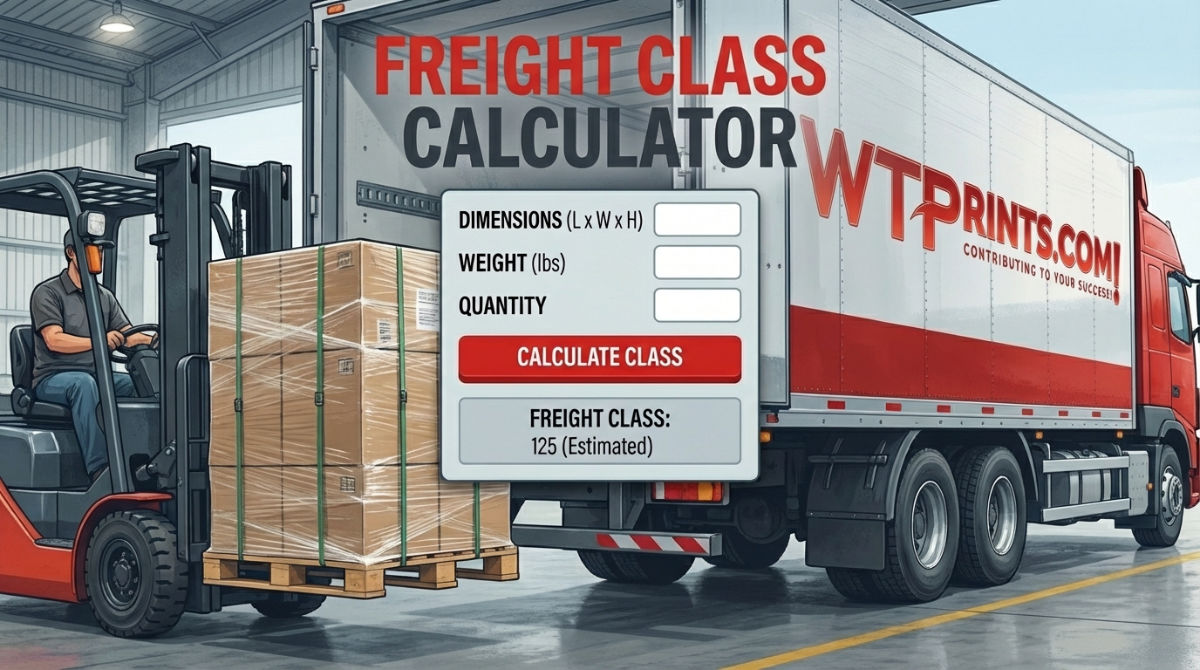
Simply enter the pallet dimensions and total pallet weight. The Freight Class automatically displays. It calculates results based on the National Motor Freight Classification (NMFC) codes from the National Motor Freight Traffic Association. A chart illustrating freight classes is below the calculator.
If you know your freight rate, add it to the Total Freight Cost section to figure your total shipping cost. This does not include additional freight costs such as insurance, special handling, hazardous and fragile cargo fees.
Note that there are many variables that affect freight classification and freight rates. Be sure to confirm class and rate with your carrier, especially if you’re shipping something new or different from your usual shipments.
Definitions of Freight Class Criteria
The NMFC assigns a freight class based on four criteria:
1- Density
2 - Handling
3 - Stowability
4 - Liability
Density
Density refers to the weight of a shipment relative to the space it occupies, typically measured in pounds per cubic foot. This is often the most influential factor in determining freight class—denser items that pack more weight into less space generally receive lower (and less expensive) freight classes. For example, a pallet of steel bolts would have high density and qualify for a lower class, while a shipment of ping pong balls would have very low density and receive a higher class despite weighing less overall.
Handling
Handling considers how difficult or easy a shipment is to load, unload, and transport. Items that require special equipment, careful positioning, or extra labor due to their shape, fragility, or hazardous nature receive higher freight classes. A standard palletized shipment of boxed goods is easy to handle, while an oddly shaped piece of machinery requiring a forklift with special attachments or items that must remain upright throughout transit would be classified higher due to increased handling requirements.
Stowability
Stowability evaluates how easily freight can be arranged and stored alongside other shipments in a trailer, container, or warehouse. Items that stack well, fit neatly with other cargo, and have no restrictions earn better classifications. Freight that cannot be stacked, must be kept away from certain materials, or has unusual dimensions that waste trailer space—such as large rolls of carpet or hazardous materials requiring separation—receives a higher class due to poor stowability.
Liability
Liability accounts for the risk of freight being damaged, stolen, causing damage to other shipments, or being perishable. Higher-value goods, fragile items, and perishables carry more liability and therefore receive higher freight classes. Electronics, fine art, and temperature-sensitive pharmaceuticals represent high-liability freight, whereas durable, low-value commodities like gravel or lumber carry minimal liability and qualify for lower classes.
Process for Freight Class Calculations
Here are the calculations used in figuring the freight class.
1 – Find the overall dimensions of a single pallet.
2 – Determine the pallet weight. For example, let’s say a pallet is 2500 lbs.
3 - Calculate the volume of the pallet. Volume = Pallet L x W x H (in cubic feet). For example, a 48” x 40” x 60” pallet is 4’ x 3.33’ x 5’ = 66.7 cubic feet.
4 – Divide pallet weight by volume to get density. In this example, 2500 ÷ 66.7 = 37.48 lbs/cu. Ft.
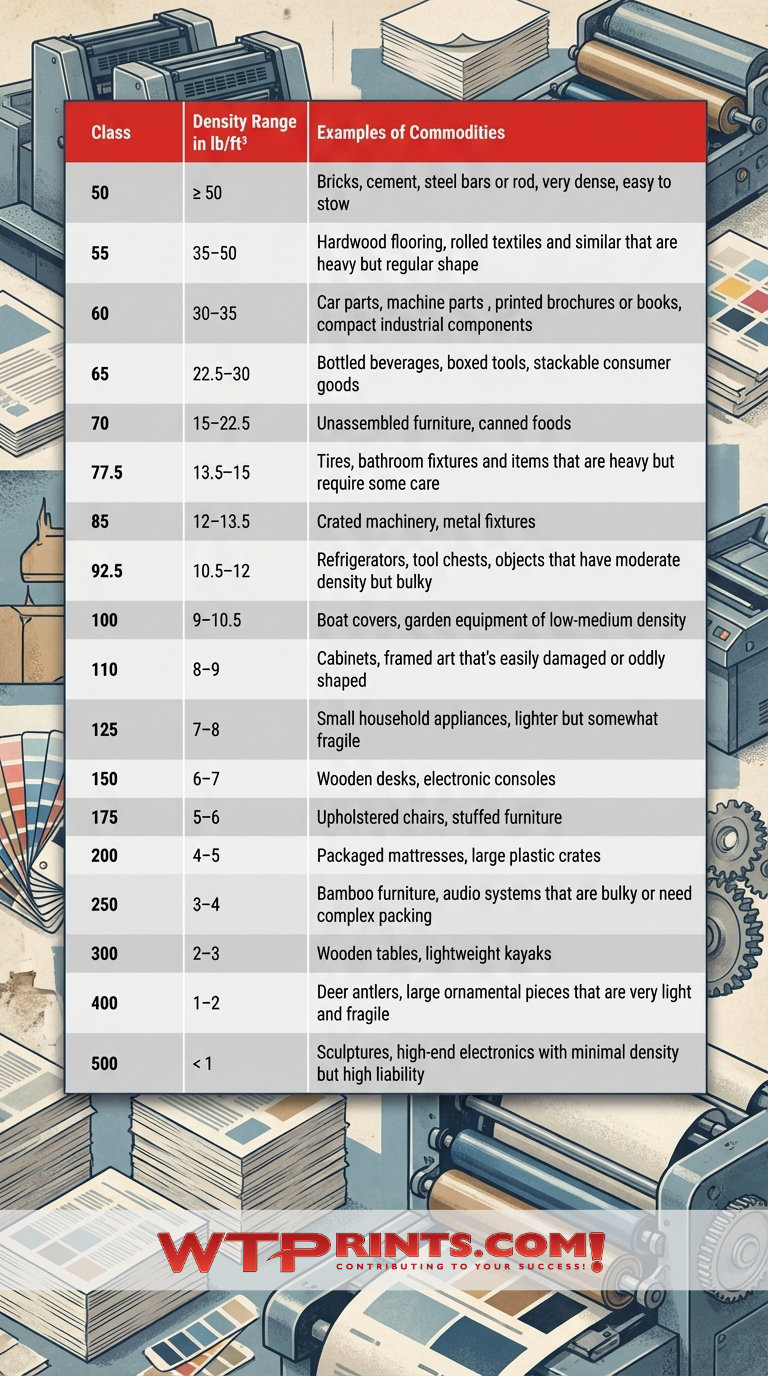
5 – Lookup that density in the NMFC table below to determine the pallet’s freight class.
Freight Class Chart
Go here for more helpful articles on the printing business.